

From Passive Support To Active Adaptation: 4D Titanium Implants Rewrite The Logic Of Medical Titanium
From Passive Support To Active Adaptation: 4D Titanium Implants Rewrite The Logic Of Medical Titanium
For a long time, the core value of titanium
alloy in the field of medical implantation has always revolved around “stable support”. From orthopedic plates,
artificial joints to dental implants, medical titanium has long become the
clinically recognized gold standard for implant materials due to its excellent
biocompatibility, corrosion resistance and lightweight mechanical properties. However,
the limitations of traditional static titanium implants have always existed:
the prefabricated form is difficult to fully adapt to the patient's
differentiated bone defect contour, and can only be passively carried after
implantation, and the state cannot be dynamically adjusted with the bone tissue
healing process.
Recently, a joint R&D team of domestic
universities published a 4D metal metamaterial bone implant research in
"Nature Communications“, breaking this application
logic that has lasted for decades, and upgrading medical titanium from a ”passive support" to an intelligent repair carrier that can
respond to the environment autonomously in the body.
The core innovation of this 4D titanium
implant does not break away from the mature advantages of titanium alloy
itself, but reconstructs the way titanium is used through structural design. It
uses high-elastic titanium alloy as the main support skeleton and biodegradable
magnesium alloy as the restraint layer. It maintains a compressed and folded
form in the early stage of implantation in the human body, which can not only
reduce the surgical wound, reduce the aggressiveness, but also reduce the
damage to the surrounding soft tissue during the operation. After entering the
human body fluid environment, the outer magnesium alloy restraint layer
gradually degrades at a preset rate. The titanium alloy skeleton that was
originally restrained relies on its own super-relasticity to stretch slowly,
automatically adjusting the contour to fit the patient's irregular bone defect
wound.
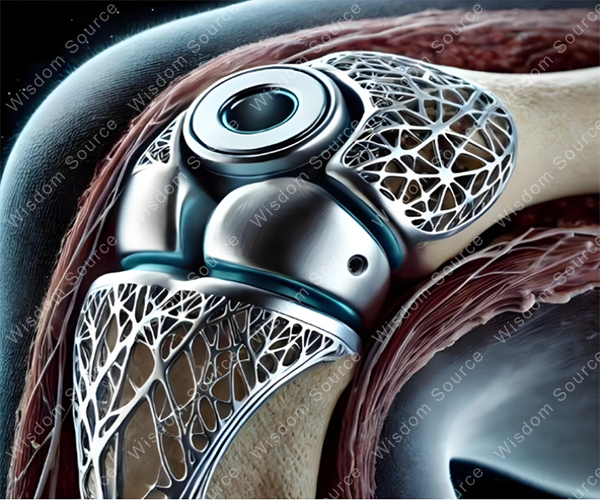
This design accurately hits the long-term
pain points of traditional orthopedic repair: the morphology of bone defects in
different patients is very different, and the traditional static prefabricated
titanium stent can only be “approximately matched”. The gap between the stent and the original bone will not only
reduce the initial fixation stability, but also hinder the growth of newborn
bone tissue. If a large-size stent is forcibly selected, the surgical incision
has to be enlarged, which will aggravate the patient's trauma. The
characteristic of 4D titanium implants “retracting and
implanting, self-expanding in vivo" just solves this dilemma. After the
deformation is completed, the porous titanium structure builds a stable
three-dimensional bone growth channel on the bone surface, improving the fusion
efficiency of bone tissue and implants.
What is more worthy of attention is that
this research has turned “resilience” into a treatment. The mechanical signals of traditional implants
are passively sustained, while the resilience generated by 4D metal
metamaterials during stretching can actively stimulate the surrounding bone
tissue and activate the osteogenic signaling pathway. At the same time, the
magnesium ions released by magnesium degradation have anti-inflammatory and
bone-promoting biological activities. The two work together to form a “1+1>2” bone regeneration effect.
In terms of mechanism selection, this
technology does not adopt the common thermal drive scheme of nitinol shape
memory alloy, but adopts a new path of “degradation of
the magnesium restraint layer triggers the deformation of the titanium skeleton”, completely avoiding the potential safety risks of nickel ion
precipitation. The titanium alloy matrix still continues the core advantages of
medical-grade titanium with excellent biocompatibility, corrosion resistance,
and stable mechanical strength, and can maintain reliable support in the body
for a long time. Relying on metal additive manufacturing technology, this
implant can also be customized with a porous dot matrix structure, and the
mechanical modulus can be accurately regulated by adjusting the pore parameters,
effectively reducing the stress shielding problems common in traditional
titanium implants, and reducing the absorption shrinkage caused by long-term
uneven force of the surrounding primary bone tissue.
At present, 3D printed static titanium orthopedic implants have entered large-scale clinical application, and this 4D titanium composite metamaterial is still in the experimental verification stage. Before the official landing, it is still necessary to complete a series of research on the long-term stability of materials, long-term safety in vivo, and large-scale precision preparation. In addition, the large-scale precision preparation and cost control of titanium-magnesium composite structures are also thresholds that industrialization must cross. But in the view of the industry, the value of this research has long surpassed the single product itself: titanium is no longer just a fixed rigid metal, but can become an intelligent repair carrier that perceives the environment in the body and adjusts its form autonomously. After the technology matures in the future, such intelligent deformation titanium implants are expected to cover more complex orthopedic scenarios such as traumatic bone defects, spine bone repair, and maxillofacial bone reconstruction. At the same time, they will also force upstream medical titanium powder preparation, precision additive manufacturing, dissimilar metal composite processing and other supporting technology iterations in the whole industry chain. After the implementation of this technology, the sphericity and oxygen content control accuracy requirements of medical titanium powder will be higher than that of existing 3D printed titanium powder. Companies that have laid out high-purity medical titanium powder production lines in advance are expected to take the lead in entering the supply chain system of this emerging implant, injecting a new growth momentum into the already mature medical titanium powder.