

A Revolution With A Titanium Buckle: When Titanium Alloy Structure Replaces The Spring
A Revolution With A Titanium Buckle: When Titanium Alloy Structure Replaces The Spring
In the
product evolution history of outdoor backpacks and commuter bags, the iteration
of high-performance fabrics and the upgrade of ergonomic carrying systems have
always been the absolute focus of industry discussions and consumer attention. However,
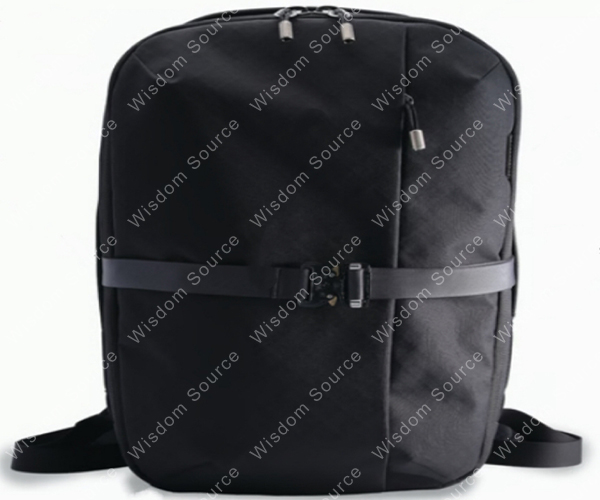
the Everyday Pack v2 backpack recently launched by the British brand Wingback
on the crowdfunding platform has jumped out of these conventional upgrade
paths, relying on a “small part” that almost no one paid attention to before, which triggered
continuous discussions in the equipment circle.
This
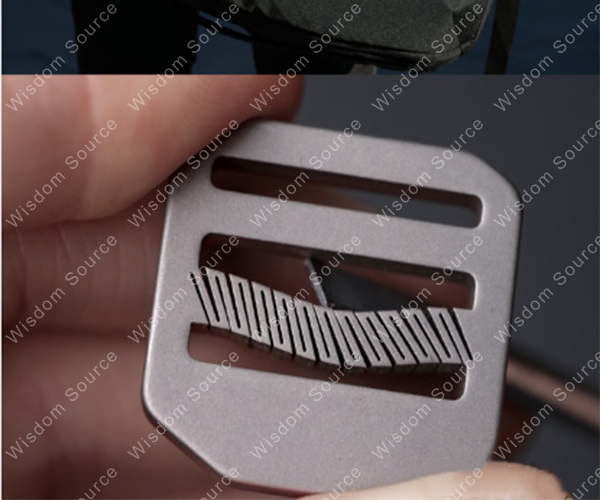
product is equipped with the brand's self-developed SOLIDSTATE™ buckle solution, which was designed by former Dyson engineer
Alasdair. Its most groundbreaking design is that it uses electric discharge
processing (EDM) technology to cut a complete one-piece flexible buckle
directly from a whole piece of titanium alloy sheet. This design completely
eliminates the spring and movable pin components that are the most likely to
fail in traditional backpack buckles, and related technical solutions have
applied for intellectual property protection.
For a
long time, traditional backpack buckles have generally adopted a multi-part
assembly structure. Multiple independent components such as springs, movable
buckles, and housings need to be assembled and combined one by one. After
long-term high-frequency opening and closing, and use in complex outdoor
environments, it is easy to experience spring fatigue failure, pin shaft
shedding, wear and loosening of parts, and other problems. Seemingly
inconspicuous small hardware is precisely a common shortcoming that reduces the
overall durability of backpacks. The unique characteristics of EDM technology
have opened up a new design space for materials such as titanium alloys with
high hardness and difficult to shape finely by conventional cutting methods:
the entire processing process does not require physical tools to contact the
workpiece, and through precise electric discharge corrosion removal, the entire
piece of titanium can be processed to maintain the integrity of the overall
structure, but also to achieve local controllable elastic deformation of
complex geometric contours. This also allows the clamping elasticity required
for the buckle to no longer rely on additional spring components, and is
completely provided by the cutting structure of the titanium material itself
that has been carefully calculated and designed. This kind of manufacturing
idea also points to a clear trend in the equipment manufacturing industry: when
the precision machining accuracy breaks through to the micron level, the
structural design of the material itself can completely replace a large number
of traditional independent mechanical movable parts.
In
addition to the core highlight of the SOLIDSTATE™ titanium alloy buckle, this
backpack is also equipped with a knurled titanium alloy zipper pull as a
matching hardware detail. These seemingly insignificant design elements
combined together clearly convey a signal of a transformation taking place in
the industry: The application of titanium alloy in backpack products has
completely moved beyond the decorative accessory positioning that focused on
lightweight and corrosion resistance in the early days, and has officially
entered the stage of being structural components that undertake core mechanical
functions.
An inconspicuous backpack buckle is not a large piece of equipment, but it has become a display window for the precision machining capabilities of titanium alloy. In the past, when everyone talked about titanium alloy outdoor parts, the key words were always inseparable from lightweight and anti-rust; and the integrated flexible structure brought about by EDM wire cutting opened up a new imagination space: the material itself can become a sports mechanism. As the cost of EDM and micro-fabrication continues to decline, this idea of “replacing parts with structures” may be extended to more small-piece scenarios such as tactical equipment, outdoor wear, and luggage hardware in the future. The collision of new materials and new craftsmanship is often hidden in such a small buckle.