

Titanium Pitfall Avoidance Guide: How to Choose Between Titanium Steel, Pure Titanium, and Titanium Alloys?
Titanium Pitfall Avoidance Guide: How to Choose Between Titanium Steel, Pure Titanium, and Titanium Alloys?
When buying jewelry, tableware or medical
supplies, are you always surrounded by ”titanium steel“, ”pure titanium“
and ”titanium alloy"? Obviously they all carry the
word "titanium", but the prices are very different, some are tens of
dollars, some are thousands of dollars.
1. Titanium Steel: The Name Has “Titanium”, But It Has Nothing To Do With
Titanium.
First pour a pot of cold water on everyone:
there is no titanium in the titanium steel!
This name is the merchant's “marketing careful machine”. Its true
identity is 316L stainless steel, and the standard grade is 022Cr17Ni12Mo2. The
main component is iron, plus chromium, nickel, molybdenum and other elements.
The reason why it is called “titanium steel" is just to distinguish it from ordinary
stainless steel, which sounds more advanced, so as to sell at a good price.
However, objectively speaking, the cost and sweat resistance of 316L stainless
steel are indeed stronger than ordinary stainless steel. As a jewelry, it is
not cost-effective, but it is still stainless steel in nature, and it has
nothing to do with “titanium material”. Half a dime.
If you just want to buy jewelry with a high
price ratio and are not afraid of slight rust (although the corrosion
resistance is good, long-term exposure to sweat may still oxidize), titanium
steel is a good choice; but if you are going for the characteristics of ”titanium", don't be fooled by the name!
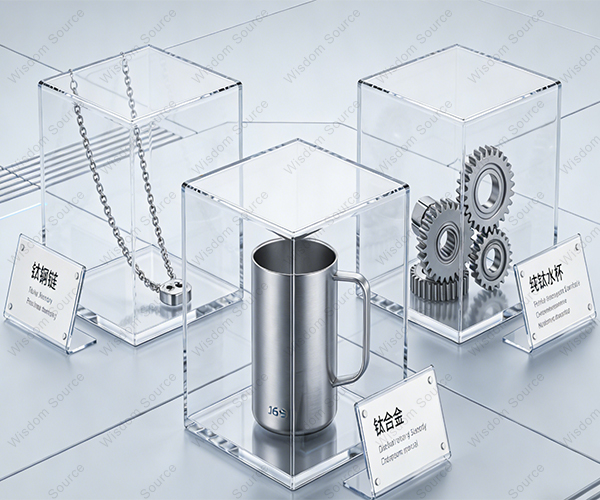
2. Pure Titanium: Almost Pure "Power School”
The real titanium material starts with pure
titanium. Pure titanium is a metal material with extremely high titanium
content. The titanium content of newly made sponge titanium (titanium raw
material) is close to 100%, but because the chemical properties of titanium are
too active, it will react with oxygen, nitrogen, hydrogen and other elements as
soon as it comes into contact with air, so pure titanium with 100% purity is
almost non-existent.
In the industry, those with a titanium
content higher than 95% are usually called industrial pure titanium. According
to the titanium content and impurities, they are also divided into four models:
TA1-TA4. The most common ones are TA1 and TA2.
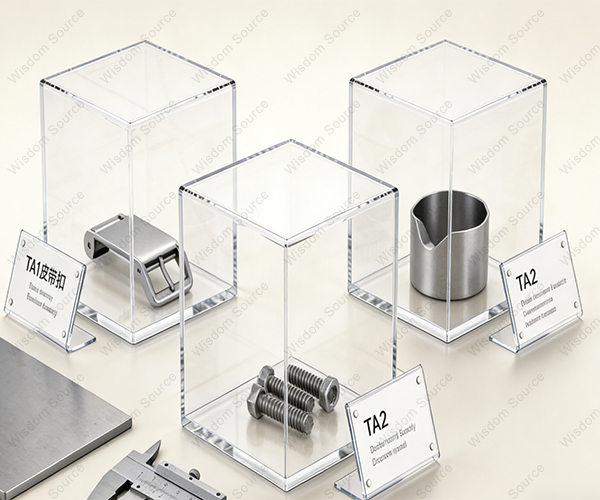
The characteristics of pure titanium are very distinctive: the higher the titanium content, the softer the material and the lower the strength, but the better the toughness. Different types of pure titanium have different uses:
1) TA1 material is soft, suitable for titanium jewelry and belt buckles with little force;
2) TA2 has a slightly higher strength and is commonly used to make shafts, small screws and other components;
3) When making pure titanium cups, you must
choose pure titanium with higher purity and lower hydrogen content, otherwise
the cup will easily crack and stretch lines and pitting may occur.
Moreover, the biggest advantage of pure
titanium is that it has excellent biocompatibility and does not cause allergies
in the human body, which is also an important reason why it is widely used in
the medical field.
3. Titanium Alloy: The “Performance King” Of Diversified Fusion
Titanium alloy is an alloy formed by the
fusion of titanium with aluminum, molybdenum, vanadium, chromium and other
metals or non-metals. It is divided into TA, TB, and TC series according to
different metallographic structures. The most commonly used one is TC4 titanium
alloy (also known as titanium 6 Aluminum 4 Vanadium).
TC4 titanium alloy has a titanium content
of about 90%, an aluminum content of 6%, and a vanadium content of 4%. It is
the world's earliest developed and most widely used titanium alloy-the output
accounts for more than half of the world's total titanium alloy production, and
its application in the aerospace industry accounts for more than 80%. It is
also the earliest titanium alloy used in the medical field.
Its advantages can be called
"all-around": strong anti-corrosion properties, higher strength than
pure titanium, good toughness, relatively easy processing and welding, and it
will not cause human allergies, and its overall performance is full.
4. Pure Titanium VS Titanium Alloy: There Is No Best, Only The Most Suitable
Many people will struggle with “which is better for pure titanium and titanium alloy”, in fact, the answer is very simple: it depends on the use!
1) If you need to make tableware, lightly stressed jewelry, and pursue ultimate purity and biocompatibility, pure titanium is the first choice.
2) If you want to choose aerospace parts,
medical implants, and high-strength tools, titanium alloys (especially regular
grades) are more suitable.
Here is a special reminder: the cost of regular grades of titanium alloys is higher than that of pure titanium. Some “titanium alloys” on the market are just pretended by adding a little titanium to other metals. Be sure to polish your eyes to identify them!