

From Ore To Finished Product: Technological Difficulties And Breakthroughs In Titanium
From Ore To Finished Product: Technological
Difficulties And Breakthroughs In Titanium
In the field of materials engineering,
titanium has always occupied a special position-it is not rare, but it is
difficult to refine; it has outstanding performance, but processing is more
testing process wisdom. From ore to finished products, every step challenges
the existing rules of traditional metal processing.
1. Oxide Film: A Natural "Smart Protective Layer”
The corrosion resistance of titanium does
not depend on the coating, but on the layer of titanium dioxide oxide film with
a thickness of only a few nanometers to a few microns. The self-healing
properties of this film are a classic case in materials science: once
scratched, the exposed titanium instantly binds to oxygen to rebuild protection
within microseconds. Engineers use this feature to accurately control the film
thickness through the anodizing process (for every increase in voltage of about
1V, the film thickness increases by 1-1.5nm), so as to obtain a structural
color from golden to blue without adding any dyes-the principle is film
interference, not pigment coloring.
2. Crowell's Law: A Refined Logic That Has Not Been Replaced For Half A Century
The production of titanium is rooted in the
Kroll method: the titanium ore (TiO₂) is chlorinated to titanium tetrachloride, and then magnesium is
reduced to sponge titanium. This process is mass-produced,
high-energy-consuming, and intermittent. The key is that titanium reacts with
almost all refractory materials at high temperatures. Water-cooled copper
crucibles + vacuum self-consuming electric arc furnaces must be used for
smelting to avoid pollution. This is also the fundamental reason why titanium
has been limited to aerospace and military industry for a long time.
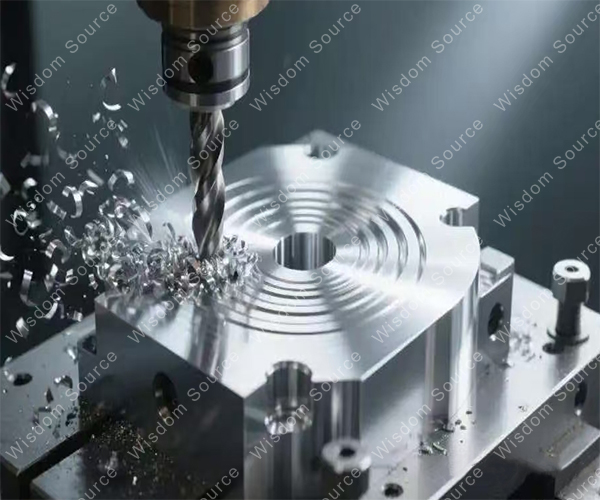
3. Thermal Processing: The ”Tip Process" With A Very Narrow Temperature Window
The β phase
transition point of titanium is usually 880-950°C, and
the thermal processing window is much narrower than that of steel. The forging
temperature is about 50-100°C below the phase
transition point to obtain a fine crystal structure; the temperature is
slightly higher, and the grain roughening leads to a sudden drop in plasticity;
the temperature is slightly lower, and the deformation resistance rises
sharply. What is even more tricky is that titanium has a low thermal
conductivity (about 1/5 of iron), and the deformation heat is not easy to
dissipate, which can easily cause local overheating. This puts forward
extremely demanding requirements for the rate control of forging equipment and
the cooling design of the mold.
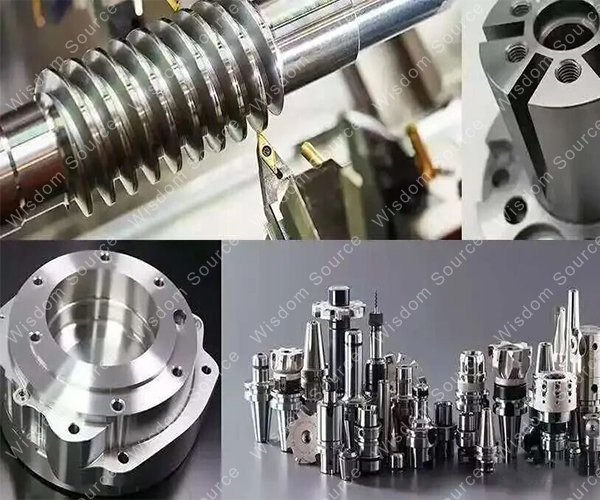
4. Cold Processing: Large Rebound, Sticky Knife, Difficult To Lubricate
The elastic modulus of titanium is about
half that of steel, and the amount of rebound is significant during cold
bending. The compensation angle must be reserved for the mold design. At the
same time, titanium has high chemical activity, and it diffuses and reacts with
the tool material during cutting, resulting in short tool life; the chips are
in a long spiral shape and are easy to wrap around the tool; the poor thermal
conductivity concentrates heat on the blade, which accelerates wear. Industrial
solutions include the use of cemented carbide-coated tools, extremely low
cutting speeds (about 1/3 of steel processing), large feed volumes to reduce
work hardening, and chlorinated paraffin-based cutting fluids to prevent
titanium shavings from burning.
5. Welding: From Gas Protection To Vacuum Cold Welding
The core pain points of titanium welding
are high temperature hydrogen absorption, oxygen absorption, and nitrogen
absorption-hydrogen absorption begins above 300°C, and
oxygen absorption above 600°C causes the weld to become
brittle. Therefore, titanium welding must be strictly shielded by argon or
helium gas, and the bath and heat-affected area (below 350°C) must be shielded throughout the process. In a vacuum environment,
the oxide film of titanium cannot be generated, and cold welding occurs when
two clean titanium surfaces come into contact-this is a special challenge in
space engineering. The ground uses this principle to realize the vacuum diffusion
connection of high-purity titanium.
6. Additive Manufacturing: Bypassing The “Dimensional Reduction Blow” Of Traditional Processing
The difficult-to-process characteristics of titanium have instead allowed additive manufacturing (3D printing) to find a place. Laser or electron beam selective melting (SLM/EBM) uses powder as raw material and melts layer by layer, bypassing many restrictions on forging and cutting. The EBM process needs to be carried out under high vacuum (to avoid oxidation of titanium powder) and preheated to about 650°C to reduce thermal stress. Today, GE Aviation's titanium-aluminum alloy turbine blades and customized titanium implants have been mass-produced through additive manufacturing-this is not only technological progress, but also the reconstruction of design logic.
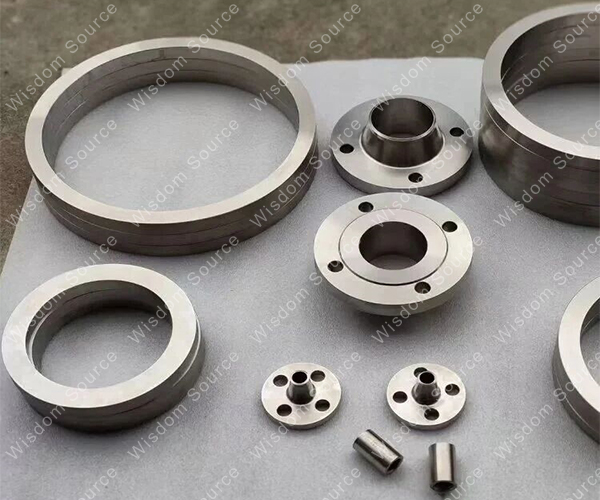
7. Recycling technology: The key to cracking the "High Price Curse”
The recycling of titanium waste (cutting
chips, forging residues) has long been a difficult problem-because titanium is
sensitive to impurities, the content of Fe, O, Cl and other elements exceeds
the standard and is downgraded to use. In recent years, the
hydrogenation-dehydrogenation (HDH) process converts waste titanium into
powder, and then through vacuum dehydrogenation and remelting to achieve a
closed loop cycle. Combined with the electron beam cold bed furnace (EBCHM)
refining, it can effectively remove high-density inclusions and gas impurities,
so that the quality of the recovered titanium material is close to the original
sponge titanium, which is the underlying technical support for the gradual “popularization” of titanium.
From ore to implants, from rockets to frying pans, every time titanium crosses the border, it is essentially a breakthrough in processing technology. Its "abnormal knowledge" is not a mystery, but the answer to the combination of material properties and engineering wisdom. To understand titanium is not to recite performance parameters, but to read a history of the evolution of craftsmanship on how humans tame the “most difficult to serve” element.