

Why Did Apple Choose Titanium Alloy? The Hardware Engineering Background Of The New CEO Tenus Reveals The Material Decision-Making Under The Market Capitalization Of 4.5 Trillion U.S. Dollars
Why Did Apple Choose Titanium Alloy? The Hardware Engineering Background Of The New CEO Tenus Reveals The Material Decision-Making Under The Market Capitalization Of 4.5 Trillion U.S. Dollars
On September 1, 2026, Apple officially
completed the handover of CEO. John Ternus, senior vice president of hardware
engineering, succeeded Tim Cook as the eighth CEO, and Cook was transferred to
executive chairman. At this time, Apple's market capitalization has exceeded
4.5 trillion US dollars, and Tenus has joined the Apple design team since 2001,
leading the comprehensive transformation of Mac from Intel chips to M-series
self-developed chips, and participated in the development of Apple Watch,
AirPods, Vision Pro and other full-line products.
This hardware engineering background is
directly related to a key question: why did Apple choose titanium alloy at the
time? The answer lies in the fact that titanium alloy meets the positioning of
light weight, high strength and flagship at the same time. It is the core
material strategy of Apple to achieve differentiated competition in the
high-end product line.
Why Did Apple Choose Titanium Alloy? How Does This Relate To The New CEO's Hardware Engineering Background?
John Tenus' hardware engineering background
is the key to understanding Apple's material selection. He is a mechanical
engineering major and a graduate of the University of Pennsylvania. After
joining Apple in 2001, he has been responsible for core hardware engineering
for a long time, covering almost all products such as iPhone, iPad, Mac,
AirPods, Apple Watch, Vision Pro, etc. Cook commented that he “has the thinking of an engineer and the soul of an innovator,” and titanium alloy is a typical embodiment of engineer thinking in
materials science.
Compared with traditional stainless steel,
titanium alloy has a density of about 40% lower (about 4.5g/cm3 vs 7.9g/cm3),
but its tensile strength can reach 900-1200MPa, which is far higher than that
of stainless steel. 500-700MPa.Apple introduced a titanium alloy middle frame
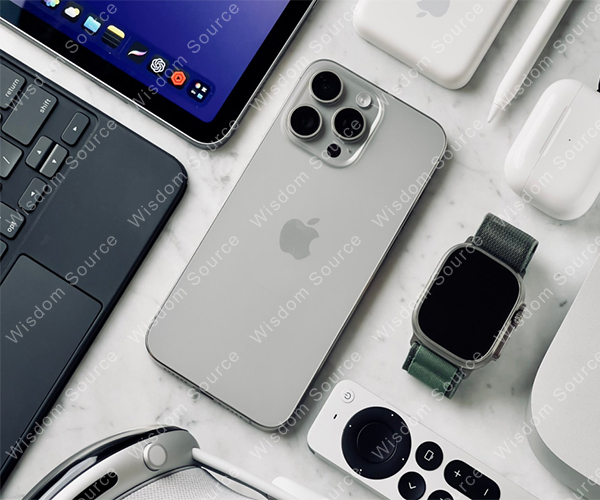
for the first time in the iPhone 15 Pro series (released in 2023), replacing
the previous stainless steel material, reducing the weight of the flagship
model by about 10-20 grams. This choice is not accidental: Apple Watch Ultra
(2022) has been the first to use a titanium alloy case, verifying the corrosion
resistance and lightweight advantages of the material in extreme environments.
Tenus has promoted the transformation of
M-series chips in the hardware engineering team, which also requires material
innovation on the supply chain side. The processing of titanium alloys is
extremely difficult-CNC precision machining, PVD coating and laser welding are
required, and the cost is 3-5 times that of stainless steel. However, with its
supply chain control, Apple has cooperated with Foxconn, Kecheng Technology and
other suppliers to overcome the problem of mass production. According to public
reports, the yield of the titanium alloy middle frame of the iPhone 15 Pro
series was only about 50% in the initial stage, and after multiple generations
of optimization, it has increased to more than 80%.
What Is The Application History And Advantages Of Titanium Alloy Materials In Apple Products?
Apple did not fully adopt titanium alloy at
once, but experienced a gradual route from professional products to flagship
phones.:
2022: Apple Watch Ultra—the first titanium alloy Apple product, positioned for outdoor
sports, emphasizing impact resistance and corrosion resistance, weighing only
61.3 grams (49mm version).
2023: iPhone 15 Pro/Pro Max—For the first time, a titanium alloy middle frame is used on the
phone, with a frosted glass back panel, and the weight of the Pro Max is
reduced from 240 grams to 221 grams.
After 2024: iPad Pro/MacBook rumors—According to supply chain news, Apple is evaluating the use of
titanium alloy housings on higher-end iPad Pro and MacBook to further reduce
weight and improve structural strength.
The core advantages are reflected in three
dimensions: lightweight directly enhances the portable experience; high
strength makes the drop resistance better than aluminum alloy; corrosion
resistance is suitable for long-term use. But the disadvantages are equally
obvious: high cost, difficult processing, and easy to leave scratches on the
surface (although Apple enhances wear resistance through PVD coating).
How Will Titanium Alloy Affect Apple's Future Product Line After The New CEO Takes Office?
After Tenus took over as CEO, the first
large-scale appearance was the autumn conference on September 9, 2026. The
market is expected that Apple will release the first folding screen mobile
phone (possibly named iPhone Ultra).Folding screens have extremely high material
requirements: the hinge needs to be high-strength and lightweight, and titanium
alloy is the ideal choice. According to public reports, the hinge of the Apple
folding screen is at least partially made of titanium alloy to cope with more
than 200,000 folding life tests.
In addition, Apple is also developing new
terminals such as AirPods with cameras, smart glasses, and home security
systems. These wearable devices are extremely sensitive to weight, and the
lightweight advantage of titanium alloy will directly determine the user's
wearing comfort. IDC expects that the total shipments of Apple folding screen
mobile phones will reach 17 million by 2027, and the production capacity and
cost control of the titanium alloy supply chain will become the key.
But titanium alloy is not everything. In
the era of AI, Apple needs to cram large model functions into small devices,
and heat dissipation has become a bottleneck. The thermal conductivity of
titanium alloy is about 6.7W/(m·K), which is much lower
than the 237 W/(m·K) of aluminum alloy. This means that
under the long-term operation of higher-performance chips (such as A18 Pro),
the titanium alloy shell may cause the body temperature to be higher. Apple may
need to use graphene heat dissipation film or VC heating plate internally to
make up for it.
What Is The Relationship Between Apple's Hardware Strategy In The AI Era And The Choice Of Titanium Alloy?
The criticism of Cook by Silicon Valley
public opinion focused on “the lack of real innovation
in the iPhone, and the company is in trouble in the field of artificial
intelligence.”The plate that Tenus took over was: the
supply chain was maximized by Cook, but the AI narrative lagged behind. Apple's
answer is betting on hardware-the terminal entry battle in the AI era, and the
final fight is hardware materials and integration capabilities.
Titanium alloy is not only a material
upgrade, but also Apple's strategy to build a moat in the high-end market. The
Android camp (such as Samsung Galaxy S24 Ultra) is also using titanium alloy,
but Apple relies on its own chips (M series, A series) and iOS ecosystem to
control hardware and software collaboration more accurately, so as to obtain a
better energy efficiency ratio when AI reasoning and end-side large models are
running. For example, Apple emphasizes privacy protection and local processing
in Apple Intelligence, and lightweight titanium alloy equipment helps reduce
power consumption and heat dissipation pressure.
But the challenge is also there: the high
cost of titanium alloy has forced Apple to further increase the pricing of the
Pro series. The iPhone 15 Pro starts at US9999, while the iPhone 15 entry model
is US7799, with a price difference of US2200.If Apple devolves titanium alloy
to the standard version, it may squeeze profit margins; if it remains in the
Pro series, it may widen the product positioning gap and affect the mid-range
market share.
Question & Answer
Question: How much lighter is titanium
alloy than stainless steel? Why doesn't Apple choose aluminum alloy directly?
Titanium alloy has a density of about
4.5g/cm3, which is about 43% lighter than stainless steel (7.9g/cm3), but its
strength is close to 1.5 times that of stainless steel. Although aluminum alloy
is lighter (2.7g/cm3), it has lower strength (about 300-500MPa) and is easy to
deform, making it unsuitable as the middle frame material of flagship mobile
phones. Titanium alloy is the best balance between light weight and strength.
Question: How high is the processing cost
of Apple titanium alloy?
According to public reports, the
manufacturing cost of the titanium alloy middle frame of the iPhone 15 Pro
series is about 3-5 times that of the stainless steel version, which involves
CNC precision machining, PVD coating, laser welding and other processes, and
the yield has been less than 50%. Apple locks in supplier production capacity
through long-term contracts and continuously optimizes processes to reduce
costs.
Question: Does the new CEO Tenus have a
direct impact on the choice of titanium alloy materials?
As the senior vice president of hardware
engineering, Tenus was directly involved in the titanium alloy decision-making
of the Apple Watch Ultra and iPhone 15 Pro series. He led the transformation of
Mac from Intel to M chips, which also required material innovation on the
supply chain side. Cook commented that he “has the
thinking of an engineer”. The choice of titanium alloy
is a typical product of the engineer's thinking on the trade-off between
performance and cost.
Tenus' appointment marks Apple's entry into
the “hardware +AI” two-line
combat stage. The choice of titanium alloy material is not only related to
product weight and texture, but also directly linked to Apple's terminal
competitiveness in the AI era. Follow-up needs to pay attention to whether the
folding screen iPhone launched on September 9, 2026 will use titanium alloy,
and whether Apple will expand titanium alloy to more product lines.
According to public reports, Apple is evaluating smart glasses and home security systems. The dependence of these devices on lightweight materials will determine the long-term value of the titanium alloy supply chain.