

Analysis Of The Five Cooling Methods And Process Characteristics Of Titanium Alloy Forging
Analysis Of The Five Cooling Methods And Process Characteristics Of Titanium Alloy Forging
As the core metal material in the field of
high-end manufacturing, titanium alloy is widely used in key fields such as
aerospace, precision medical equipment, petrochemical industry, and high-end
equipment due to its advantages of low density, high strength, corrosion
resistance, and good biocompatibility. Titanium alloy forging is the core
process of forming profile and special-shaped forgings, and the cooling process
after forging is the key link in determining the metallographic structure,
mechanical properties, dimensional accuracy and finished product pass rate of
the forgings.
The different cooling rates and cooling
media will directly change the hardness, toughness, internal stress and surface
state of titanium alloy forgings. According to different material grades, usage
scenarios and performance requirements, the industry has formed five mature
standardized forging cooling processes. This article disassembles the
principles, advantages and disadvantages of various cooling methods and
applicable scenarios in detail, and provides a process reference for the
production of titanium alloy forging.
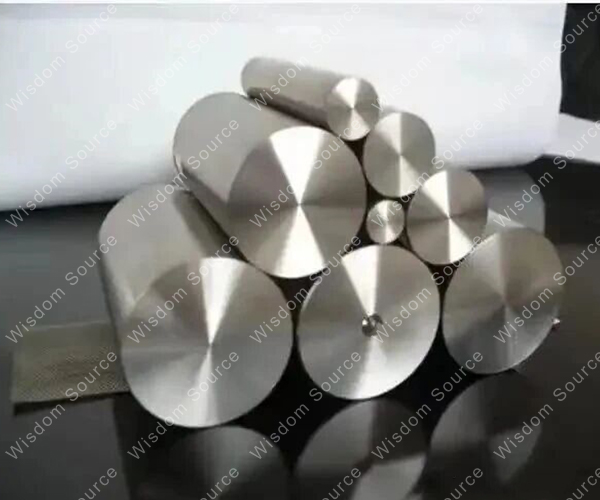
1. Natural Air Cooling (Natural Cooling With
Temperature)
Natural cooling is the most basic and
widely used cooling method in the production of titanium alloy forging. After
the forging process is completed, the forgings are placed directly in a room
temperature air environment, relying on air convection and thermal radiation to
achieve natural cooling, without auxiliary equipment and energy consumption
throughout the process.
The process is simple to operate, has zero
cost and no operating risks, and is suitable for most ordinary titanium alloy
forgings with conventional structures and no strict requirements for high
strength. But the shortcomings are also obvious: the cooling speed is slow, the
cooling temperature difference of the forgings is small, and the cooling cycle
is long. It can easily cause uneven grain tissue thickness inside the
workpiece, resulting in residual internal stress, which will affect the overall
mechanical stability of the forgings to a certain extent. It is not suitable
for the production of high-precision and high-load core components.
2. Forced Air Cooling (Rapid Air Supply And
Cooling)
Forced air cooling is an accelerated room
temperature cooling process. Continuous forced air supply of high-temperature
forgings is carried out through fans and directional blowing equipment to break
the static air insulation layer, greatly improving the heat dissipation
efficiency, and the cooling speed is far better than natural air cooling.
A reasonable forced air-cooling process can
quickly release the waste heat of forging forgings, shorten the production
cycle, effectively weaken the thermal accumulation of forgings, balance the
internal and external temperature of the workpiece, reduce the residual thermal
stress, and improve the stability of the product structure.
In the process control, it is necessary to
accurately control the blowing wind speed, blowing distance and cooling time. Excessive
cooling strength leads to rapid cooling of the surface of the titanium alloy,
causing defects such as surface oxidation, local hardening, and excessive
temperature difference between internal and external tissues. Therefore, it is
necessary to standardize and regulate the parameters according to the thickness
and structural specifications of the forgings to avoid process risks.
3. Water Quenching And Cooling (Extremely
Fast Water-Cooled Quenching)
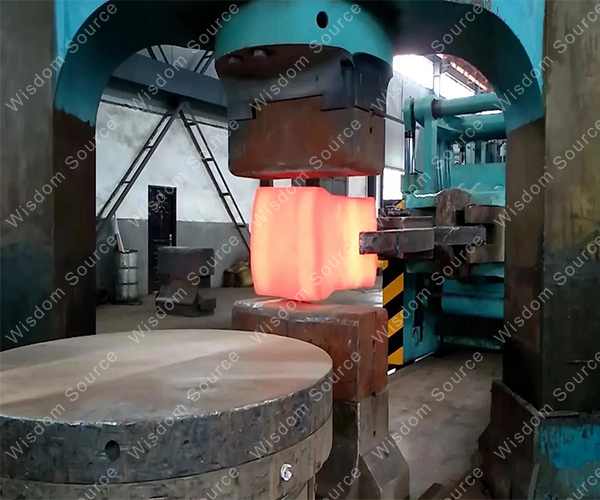
Water quenching is the fastest cooling
enhanced process for titanium alloy forging. The high-temperature forgings are
completely immersed in a clear water medium, and the high specific heat
capacity of water is used to achieve rapid cooling, and the metallographic
structure of the forgings after high-temperature molding is quickly fixed.
Titanium alloy forgings that have been
water-quenched have a dense grain structure and greatly improved strength and
hardness. They are suitable for industrial pressure-bearing parts that require
extremely high mechanical strength and compressive properties.
However, the fault tolerance rate of this
process is extremely low, and rapid cooling will cause a great temperature
gradient inside and outside the forging, which can easily produce cold
shrinkage stress, leading to deformation, cracking, brittleness and other
quality problems of the workpiece. Therefore, the water quenching process is
only suitable for specific high-strength titanium alloy materials, and the
inlet water temperature and cooling rate must be strictly controlled. It is
only used for customized production of special forgings and cannot be used for
general mass production.
4. Oil Quenching Cooling (Constant Temperature
Flexible Cooling)
Oil quenching is a medium-speed flexible
cooling process between air cooling and water quenching. Special quenching oil
is used as the cooling medium to complete the cooling of forgings in a constant
oil temperature environment.
Compared with water quenching, the cooling
rate of oil quenching is more gentle and uniform, which perfectly solves the
cracking, deformation, and embrittlement problems caused by rapid cooling, and
preserves the toughness of the titanium alloy substrate to the greatest extent.
At the same time, the oil medium can isolate the air, effectively reduce the
surface oxidation, peeling, and color difference of the forgings, and greatly
improve the surface finish of the forgings and the appearance quality of the finished
products.
The core control point of production is
constant temperature control of oil temperature. Too high oil temperature will
cause cooling failure and tissue softening. Too low oil temperature will cause
uneven cooling. Therefore, constant temperature and temperature control
equipment is required in production to ensure the unified performance of batch
products. It is currently the mainstream cooling process for high-end titanium
alloy structural parts.
5. Vacuum Cooling (High-Purity Precision
Cooling)
Vacuum cooling is a high-precision process
adapted to high-end precision titanium alloy forgings, and the whole process is
cooled and dissipated in a closed vacuum equipment.
There is no oxygen and no impurities in the
vacuum environment, which completely eliminates the oxidation, impurity, and
surface pollution problems of titanium alloy at high temperature, and preserves
the purity and original excellent properties of titanium alloy materials to the
greatest extent. At the same time, the vacuum heat conduction efficiency is
stable, the cooling is uniform, and the tissue consistency is extremely high.
The processed forgings have no oxidation layer, high precision and stable
performance. It is the core cooling process of titanium forgings in high-end
fields such as aerospace and implantable medical devices.
The only limitation of this process is that
the equipment input cost is high, the operation process is complex, and the
production efficiency is low. It is mostly used for the production of high
value-added precision forgings, and it is not suitable for large-scale mass
production of ordinary low-end titanium parts.
Summary
In summary, there is no universal “universal cooling process” for titanium
alloy forging.
For ordinary civil conventional forgings,
natural cooling and forced air cooling are preferred, taking into account cost
and efficiency; high-strength industrial accessories, suitable for water
quenching and oil quenching, balance hardness and toughness; aviation and
medical high-end precision forgings must be vacuum cooled to ensure material
purity and high-precision performance.
Precise matching of the cooling process is the core key to avoiding defects such as cracking, deformation, oxidation, and uneven organization of titanium alloy forgings, stabilizing the mechanical properties of the product, and improving the quality of the finished product. It is also the core technological point of titanium alloy refined forging production.